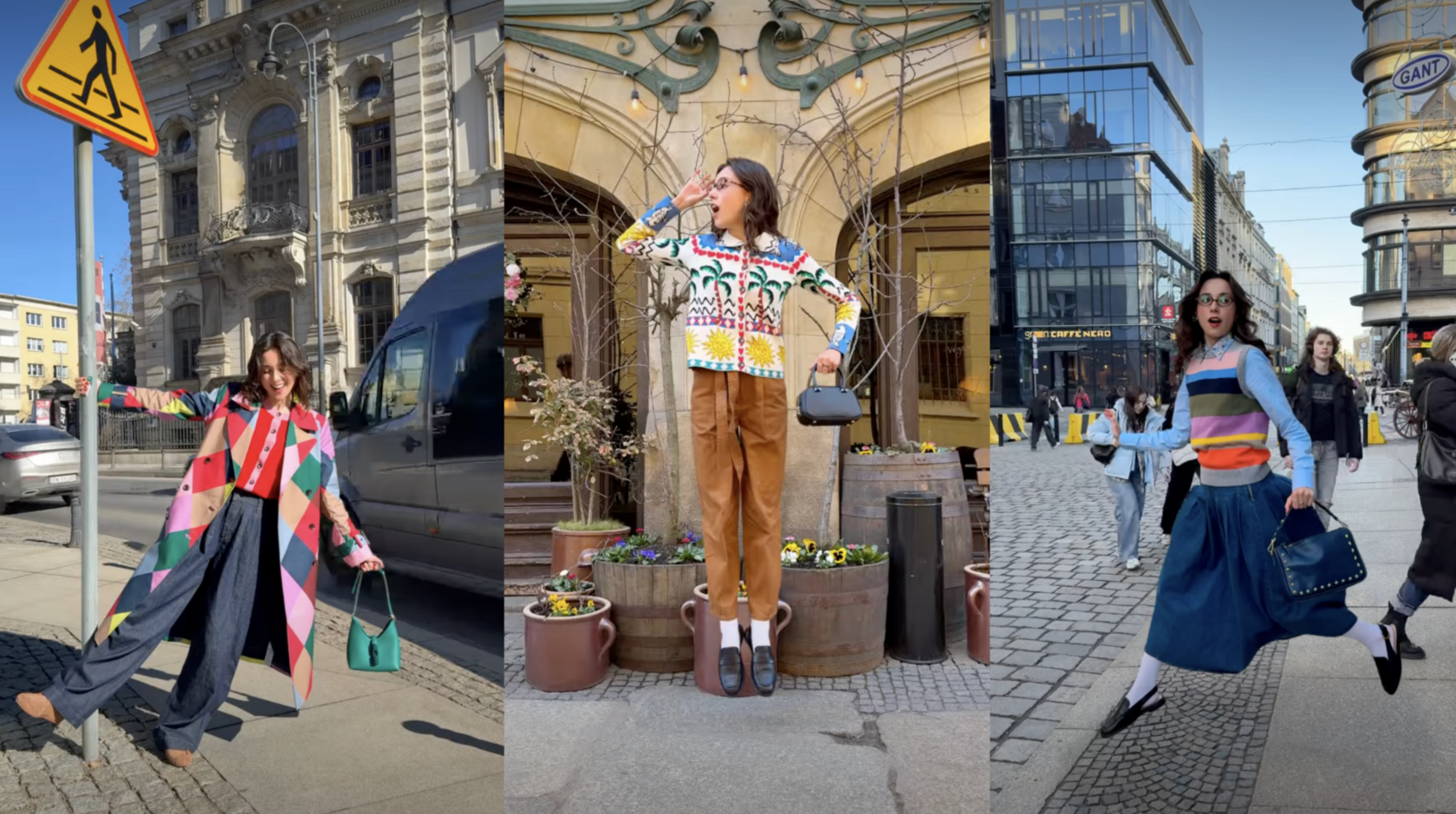
How Static Subjects and Dynamic Backgrounds Are Creating a New Visual Language on Social Media
A new visual formula is gaining momentum: the subject remains perfectly still while the world around them continues to move. Crowds blur past, trains rush through stations, city lights streak across the frame, yet the central figure appears frozen in time. The contrast immediately creates tension, transforming an ordinary scene into something cinematic and emotionally charged.
Unlike traditional portrait photography, where movement is often eliminated to maintain focus, this approach uses motion as a storytelling device. The moving background becomes an extension of the subject's emotional state. A still figure surrounded by motion can suggest calm, isolation, reflection, or even a feeling of being left behind. The image no longer documents a moment, it visualizes an emotion.
The trend resonates particularly well in today's social media landscape because it interrupts the rhythm of endless scrolling. While most content relies on rapid edits and constant stimulation, these images create a visual pause. Viewers instinctively try to understand why one element remains fixed while everything else moves, and that brief moment of curiosity becomes the source of engagement. In many ways, the aesthetic draws from cinematic concepts of temporal contrast, where different elements within the same frame appear to exist at different speeds, creating a tension between stillness and motion.
The visual language itself is not entirely new. References can be traced back to Wong Kar-wai’s use of motion blur and temporal distortion in Chungking Express, as well as the cinematic framing found in Satoshi Kon's animated works. Both directors frequently contrast still characters against dynamic environments, turning movement into a reflection of emotion rather than action. As creators continue borrowing from film and anime, stillness is becoming more than a compositional choice; it is emerging as one of the most effective ways to capture attention in a culture defined by constant motion.
Unlike traditional portrait photography, where movement is often eliminated to maintain focus, this approach uses motion as a storytelling device. The moving background becomes an extension of the subject's emotional state. A still figure surrounded by motion can suggest calm, isolation, reflection, or even a feeling of being left behind. The image no longer documents a moment, it visualizes an emotion.
The trend resonates particularly well in today's social media landscape because it interrupts the rhythm of endless scrolling. While most content relies on rapid edits and constant stimulation, these images create a visual pause. Viewers instinctively try to understand why one element remains fixed while everything else moves, and that brief moment of curiosity becomes the source of engagement. In many ways, the aesthetic draws from cinematic concepts of temporal contrast, where different elements within the same frame appear to exist at different speeds, creating a tension between stillness and motion.
The visual language itself is not entirely new. References can be traced back to Wong Kar-wai’s use of motion blur and temporal distortion in Chungking Express, as well as the cinematic framing found in Satoshi Kon's animated works. Both directors frequently contrast still characters against dynamic environments, turning movement into a reflection of emotion rather than action. As creators continue borrowing from film and anime, stillness is becoming more than a compositional choice; it is emerging as one of the most effective ways to capture attention in a culture defined by constant motion.