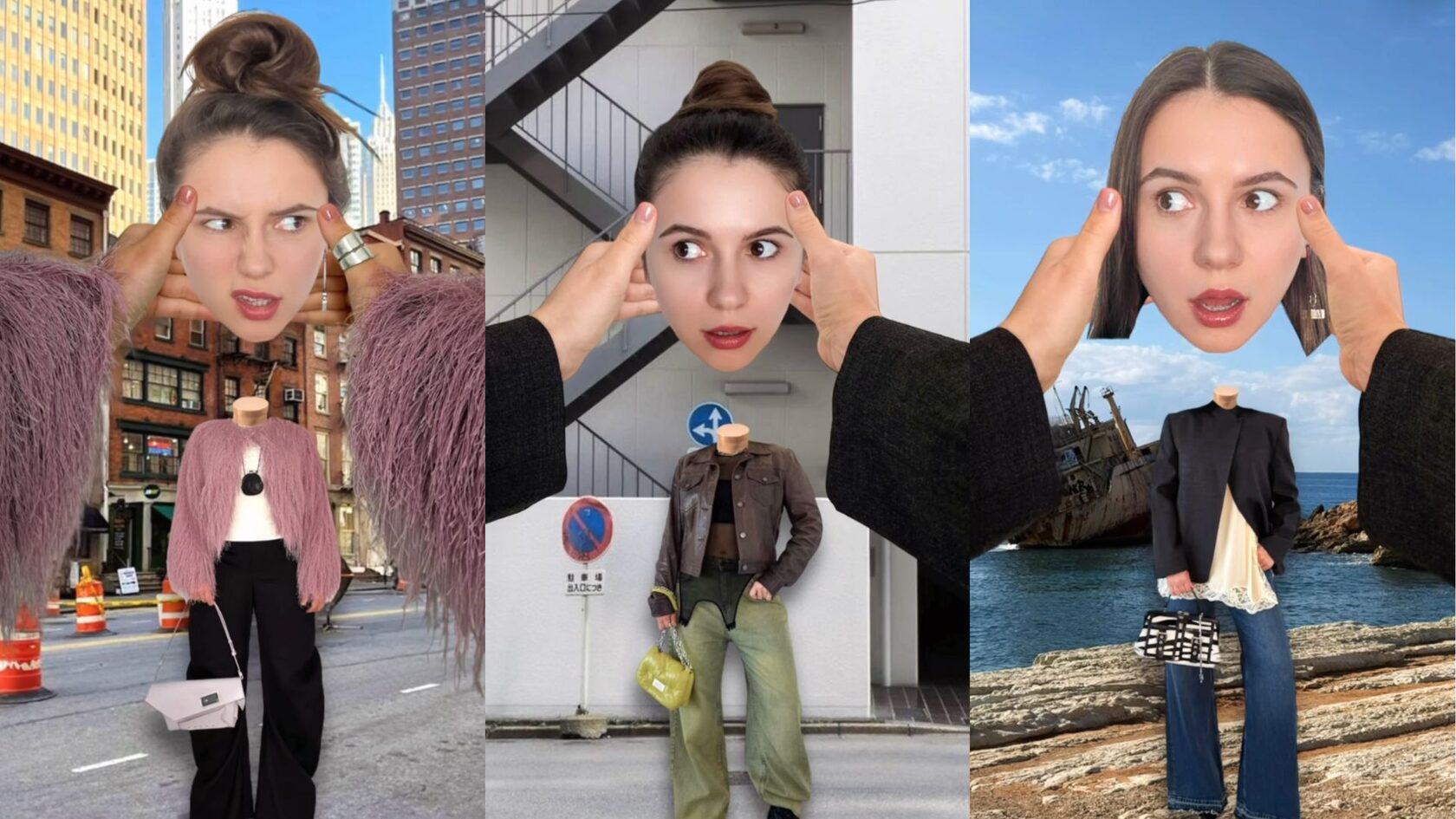
Creators are transforming still-image trends into dynamic, animated videos, adding movement and perspective to create immersive, playful, and 3D-like experiences.
Some of social media’s most popular still-image trends are quickly being reimagined as video-first experiences. A prime example is the trend where a person’s mini clone would appear on their head, hang from a bag, or hold clothing as if it were picked up from the ground. While these moments started as clever static images, creators are now turning them into dynamic video content that adds depth, movement, and storytelling potential.
The trend has evolved in playful and imaginative ways. Creators are experimenting with visual spin-offs, such as detached heads hanging from clotheslines, floating on balloon strings, or interacting with other parts of the scene in unexpected ways. The addition of subtle animation to both the backdrop and overlaying images transforms the once-flat concept into a more immersive experience. Slight movements, twists, and shifts in perspective give the impression that the viewer is entering a three-dimensional universe, where elements feel tangible and alive.
What makes this trend especially compelling is its versatility. The same concept can be applied to fashion, lifestyle, food, or art content, allowing creators to amplify storytelling and surprise viewers in ways that were impossible in still photography alone. Motion adds interactivity and playfulness, keeping audiences engaged and curious about what might happen next.
Ultimately, this evolution reflects a broader shift in how creators blend formats. Still-image concepts no longer exist in isolation, they are animated, expanded, and reinterpreted to create rich, multi-layered video experiences. As more creators experiment with movement, perspective, and 3D-like effects, trends that once felt simple and whimsical are becoming immersive playgrounds of creativity, offering endless opportunities for innovation across social platforms.
The trend has evolved in playful and imaginative ways. Creators are experimenting with visual spin-offs, such as detached heads hanging from clotheslines, floating on balloon strings, or interacting with other parts of the scene in unexpected ways. The addition of subtle animation to both the backdrop and overlaying images transforms the once-flat concept into a more immersive experience. Slight movements, twists, and shifts in perspective give the impression that the viewer is entering a three-dimensional universe, where elements feel tangible and alive.
What makes this trend especially compelling is its versatility. The same concept can be applied to fashion, lifestyle, food, or art content, allowing creators to amplify storytelling and surprise viewers in ways that were impossible in still photography alone. Motion adds interactivity and playfulness, keeping audiences engaged and curious about what might happen next.
Ultimately, this evolution reflects a broader shift in how creators blend formats. Still-image concepts no longer exist in isolation, they are animated, expanded, and reinterpreted to create rich, multi-layered video experiences. As more creators experiment with movement, perspective, and 3D-like effects, trends that once felt simple and whimsical are becoming immersive playgrounds of creativity, offering endless opportunities for innovation across social platforms.