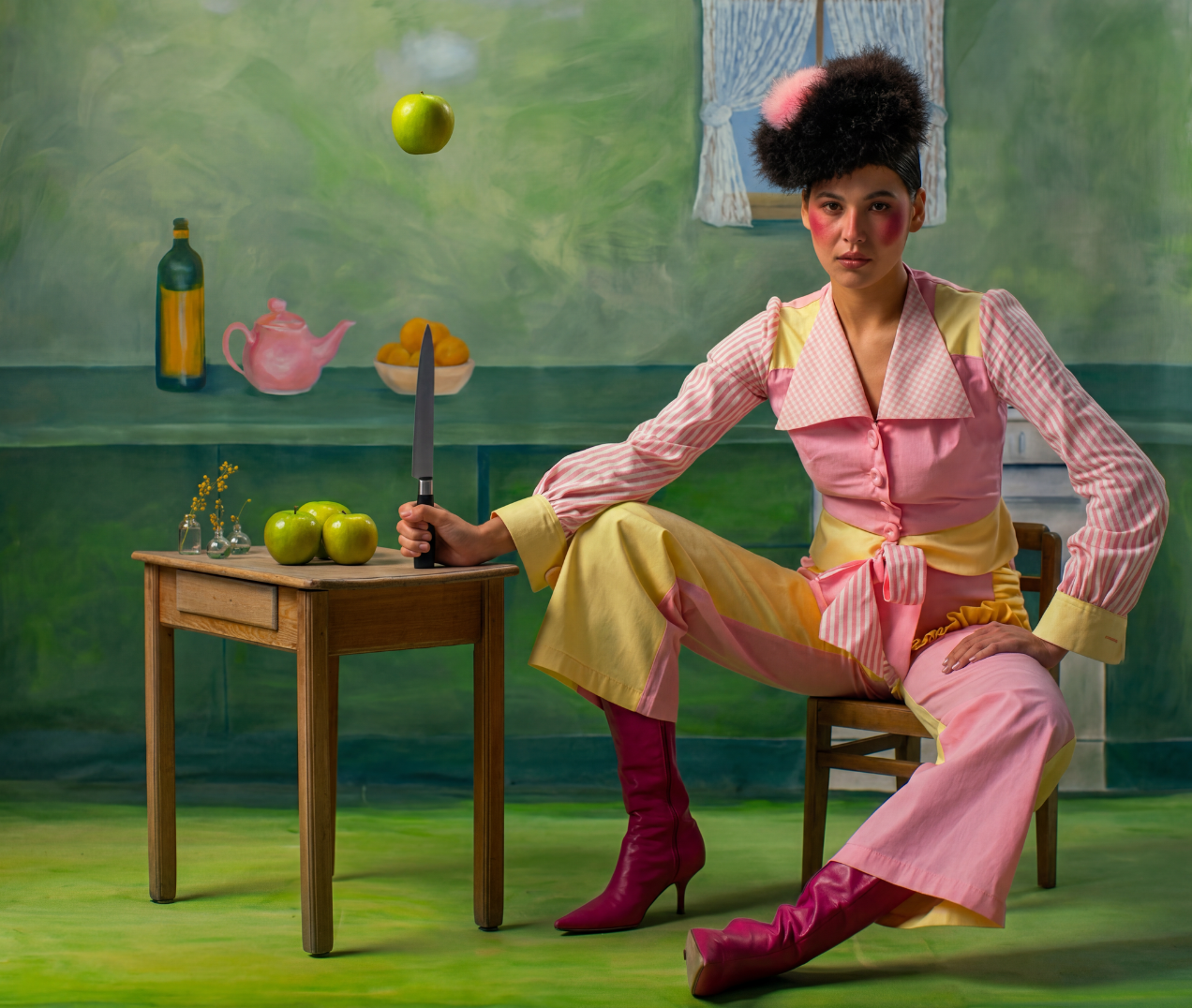
How Spring and Summer Campaigns Are Using Stillness, Precision, and Suspended Action to Capture Attention.
Spring and summer campaigns are shifting away from carefree, fast-moving visuals toward something more controlled and intentional. Instead of energy and spontaneity, brands are leaning into highly art-directed scenes where very little happens, but the viewer feels like something could happen at any moment. A talent sits still in a clean, sunlit space, then suddenly turns to reveal a swim mask. An apple drops toward a knife in perfect alignment, only to stop just before impact. The moment holds, unresolved.
This approach, often driven by precise styling and composition, turns art direction into the core of the story. Every object, prop, and movement is deliberate, creating a sense of tension within otherwise minimal environments. Seasonal elements like bright lighting and airy palettes remain, but they’re paired with surreal, unexpected details that feel slightly off. The result is a visual language that is both polished and quietly unsettling.
In a scroll-heavy environment dominated by noise and speed, this restraint becomes the hook. Instead of competing for attention through chaos, these campaigns slow the viewer down. The brain is wired to anticipate outcomes, so when a moment is stretched just before resolution, people stay to watch. That pause, where nothing fully happens, is what creates engagement and memorability.
Ultimately, this trend reflects a broader shift from capturing moments to constructing them. Spring and summer are no longer just about ease, they’re about control, precision, and anticipation. The most effective campaigns today aren’t the loudest, but the ones that can hold a viewer in a single, suspended moment just before it breaks.
This approach, often driven by precise styling and composition, turns art direction into the core of the story. Every object, prop, and movement is deliberate, creating a sense of tension within otherwise minimal environments. Seasonal elements like bright lighting and airy palettes remain, but they’re paired with surreal, unexpected details that feel slightly off. The result is a visual language that is both polished and quietly unsettling.
In a scroll-heavy environment dominated by noise and speed, this restraint becomes the hook. Instead of competing for attention through chaos, these campaigns slow the viewer down. The brain is wired to anticipate outcomes, so when a moment is stretched just before resolution, people stay to watch. That pause, where nothing fully happens, is what creates engagement and memorability.
Ultimately, this trend reflects a broader shift from capturing moments to constructing them. Spring and summer are no longer just about ease, they’re about control, precision, and anticipation. The most effective campaigns today aren’t the loudest, but the ones that can hold a viewer in a single, suspended moment just before it breaks.